![NPO法人 Forum2050[Nonprofit Organization Forum2050]](https://forum2050.com/wp-content/uploads/2024/02/Forum2050logo.png)
Hello. This is Takuzo Komabashiri, PR officer at Forum2050. At the FIFA World Cup, Japan followed a draw in its opening match with a convincing 4-0 win over Tunisia! Seeing Japan hold its own against the world’s top teams is truly moving.
Behind this brilliance on the pitch, there is in fact a chain of grassroots “international cooperation” passes. Many Japanese people, including members of the JICA Overseas Cooperation Volunteers, have worked hard around the world coaching and promoting football. The seeds of football sown in developing countries, including Tunisia, Japan’s opponent this time, have energized those communities and, in turn, have blossomed into higher standards for Japanese football and bonds of international friendship through sport.
With just one ball, football lets people connect beyond language. We at Forum2050 also want to keep making exciting passes like these with the world!
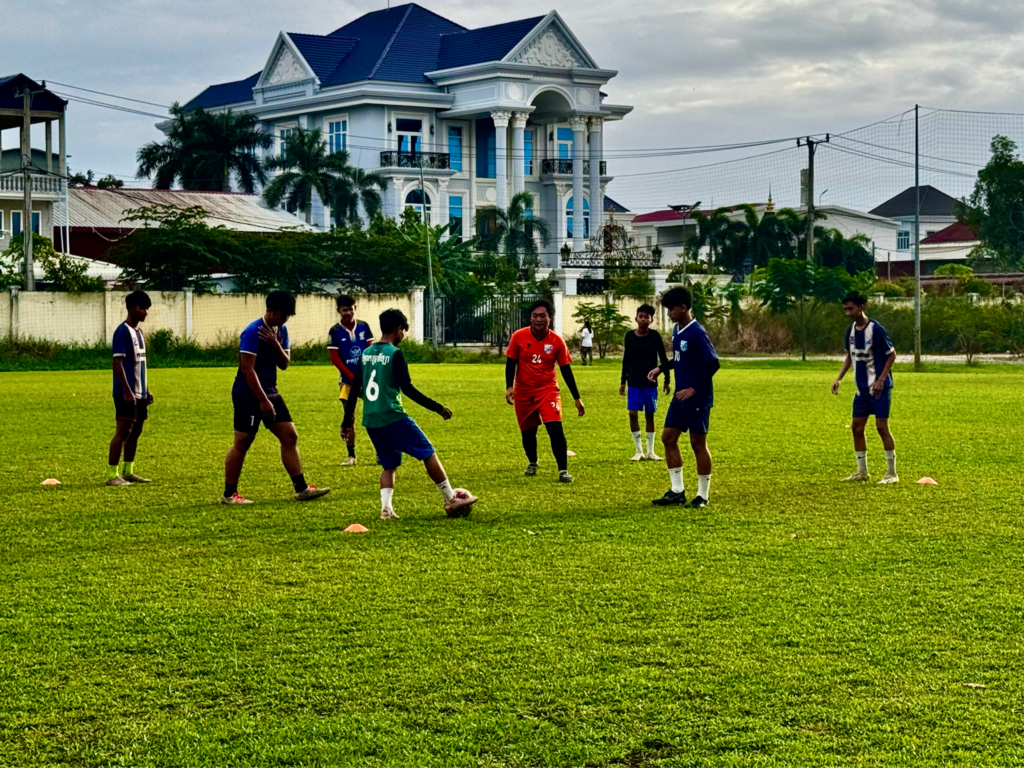
Training at the Phnom Penh Academy of the Football Federation of Cambodia
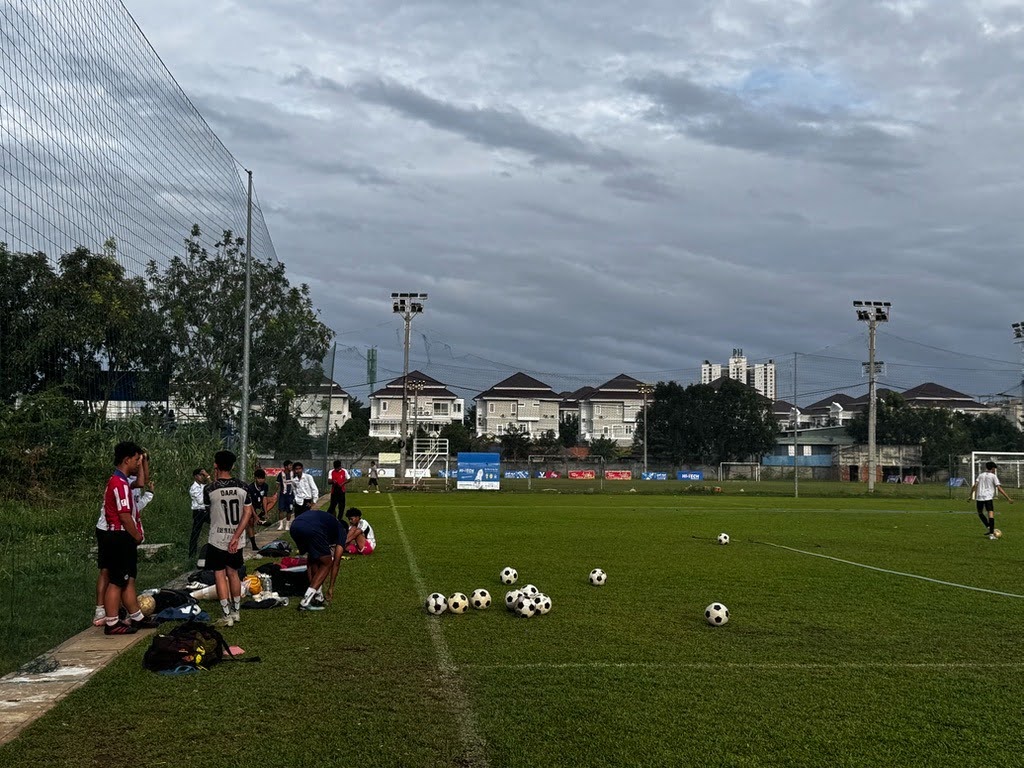
Training at the Phnom Penh Academy of the Football Federation of Cambodia
In the June 2026 newsletter, we share the importance of continuing to move. If you have any questions or comments about the newsletter, please let us know by email or other means. Requests like “I’d like to know more about this” are very welcome too!
- Topics in this newsletter –
- [Our Activities]
- [Report from TODA Takao, President, Forum2050]
Our Activities
1. [Our Activities]
Recent main activities and events
May 24 Interview and filming with Ichiro and Itsuko Hatanaka
May 25 Exchange of views with Tokyo Legal Mind K.K. (LEC)
May 27 Meeting with Matsui of the Mindanao Children’s Library
May 28 Meeting with the City of Yokohama, TVK, UNHCR and others
May 31 Interview and filming with Nanko
May 31 Exchange meeting with Georgia (with participants also from Benin, the UK/Russia and Bangladesh)
Jun 1 Lecture at Juntendo University Graduate School (Leadership in the VUCA era)
Jun 2 Meeting with Aso, JOCV in Georgia
Jun 7 Dialogue with APU-IRSA (Ritsumeikan Asia Pacific University, International Relations student network)
Jun 8 Dialogue at Wayo Kudan Girls’ Junior and Senior High School
Jun 8 Meeting with Curious Production Inc. (video production)
Jun 9 Courtesy visit to the Management Division, Community Life Department, Suginami City (in charge of peace programs)
Jun 14 Interviews and filming at the Ukrainian Sunday School
Jun 16 Dialogue at Rikkyo Jogakuin
Jun 18 Meeting with Muraoka of the Rotary Club of Osaka-Kita
Jun 18 Exchange of views with Iwabuchi, Representative of Minato Glocal
Jun 20 Peace Circle hosted by the City of Yokohama
Report from TODA Takao, President, Forum2050
Dear all,
In the breaks between the rainy-season showers, there is a hint of the humid summer to come. How are you all doing?
It was in July 2023 that Forum2050 was certified by the Tokyo Metropolitan Government as a specified nonprofit corporation. Nearly three years have already passed. Our journey has not always been smooth sailing, but lately I have been feeling deeply how glad I am that we have kept moving all this way.
Why? Because by continuing to move, things become visible. Keeping in mind that the many wonderful encounters and valuable lessons we never expected at the start are the fruit of your warm support, I want to keep walking on.
■ Deepening complex humanitarian crises, and Japan
The total number of refugees in the world remains close to 120 million (UNHCR, including internally displaced people). And this does not necessarily include so-called climate refugees. The risk of food crises has grown, partly in light of the recent situation in the Middle East, and more than 260 million people worldwide face “high levels of acute food insecurity” (FAO/WFP). Armed conflict, extreme weather, poverty, inequality and economic insecurity, the crisis of democracy and violations of human rights . . . Very sadly, the state of the world today is, on the whole, steadily getting worse, and especially in fragile countries and regions, crises are deepening and becoming chronic.
What about Japan? Its food self-sufficiency rate is below 40 percent, its energy self-sufficiency rate is around 10 percent, its dependence on the Gulf states for energy is higher than any other country’s, and it entrusts its own security to another country . . . Despite this structurally vulnerable situation, Japan continues to enjoy peace and good fortune. For better or worse, the number of Japanese people who can grasp the devastation of armed conflict or the suffering of hunger as “their own issue” is steadily shrinking.
“Those problems are for the important people in the world to think about. There is nothing we ordinary citizens, let alone young people, can do about them even if we are aware of them. So what does it matter?”
I suspect this is what the great majority of Japanese people honestly think. In my own experience with many young people and children, as I deepened our dialogues, I often caught a glimpse of these honest feelings at the end of the conversation. In fact, I think the deeper the dialogue went, the more often we arrived at such honest feelings.
“But is it really all right to be indifferent to people in need around the world? Are you, as a human being, all right with that?” Or, “Japan’s peace and prosperity depend on world peace and stability. Let’s take more interest in the world.” Sadly, saying things like this almost never reaches the depths of people’s hearts, or the hearts of young people.
Arguments about “how people ought to be,” so-called “should” arguments, do not move people’s hearts.
So what should we do?
Should we devote ourselves to nurturing a small number of highly conscious people toward co-creating a peaceful and prosperous future, and give up on everyone else?
By continuing to think and continuing to act, I feel I have begun to see something, however dimly. Of course, it is not yet something that can be called an “answer.” Perhaps something that can simply be called an “answer” does not exist in the first place. But by continuing to ask questions, and above all by continuing to engage and hold dialogue with young people, I feel I have begun to see “something,” just a little.
■ What are “words that move the heart”?
From late May through this month, to develop learning materials to help people think about peace as their own issue, we interviewed many people. Among them were Hatanaka, who is actively contributing to society while living with ALS; Nanko, a university student who cared for his mother from fifth grade of elementary school, overcame a period of not attending school, and is now seeking a path in social welfare; Matsui, who has spent many years supporting children in Mindanao who suffered through a long civil war, and his family, his wife April Lyn and their daughter; and Igor, who works tirelessly as a bridge between Ukraine and Japan, and a mother and son from the Ukrainian Sunday School whom Igor introduced to us. They are people in very different situations, but they had something in common.
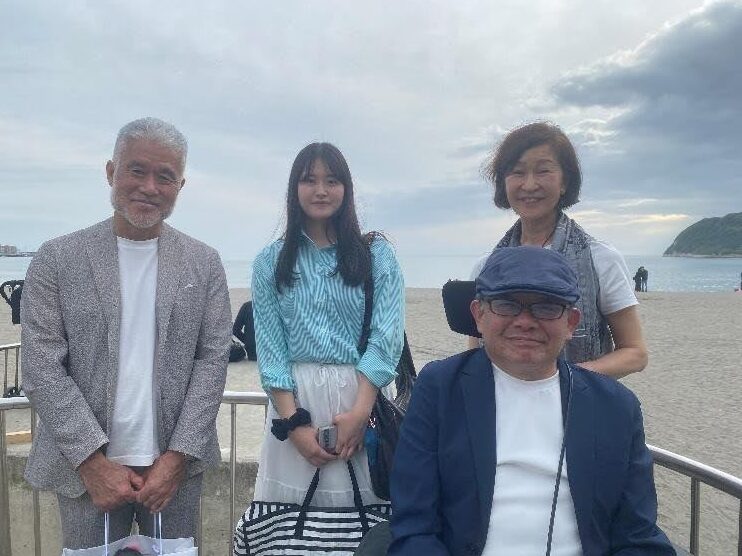
With Ichiro and Itsuko Hatanaka on the beach at Hayama
They have all been through many hardships and are living happily. Usually, we spare no respect for people who, “in spite of” many hardships, have overcome them and live strongly, and we are moved by the way they live.
But as my dialogues with them went on, I began to feel uneasy with the idea of “in spite of hardship.” Rather, I felt that it was “because they encountered hardship” that they, through extraordinary efforts to overcome it, are seeing a new landscape of happiness.
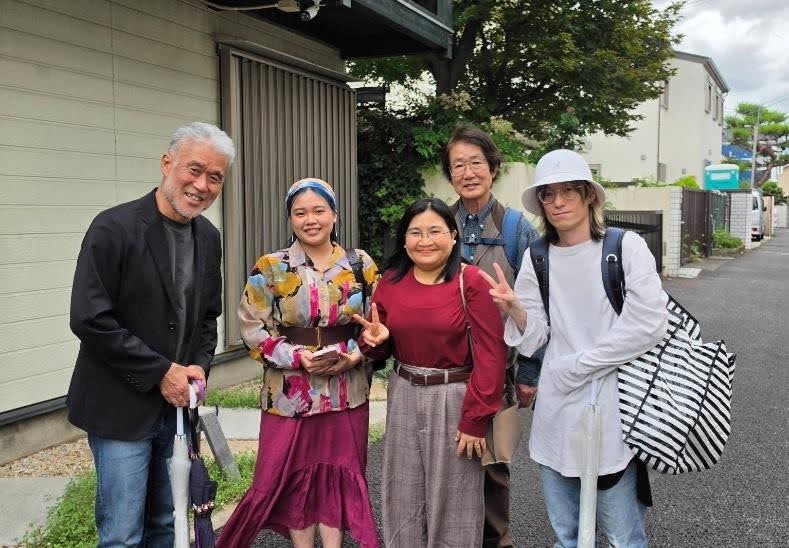
With the family of Matsui, who founded the Mindanao Children’s Library
April Lyn was born with a cleft lip and palate, grew up in a poor single-mother household, was bullied from elementary school, and worked to support her family. Until she was 17, no one paid her any attention. But precisely because she had walked such a path, she felt that “someone like me” could understand the street children of Mindanao, who had lost their place in the world because of the long civil war. Having met Tomo Matsui and been blessed with a bright daughter, she now seems very happy. The many children that Tomo Matsui and April Lyn protected and raised are now active throughout Mindanao society. But for the two of them, this seems to have been less a social contribution made for its own sake than something that “gave meaning” to each of their lives.
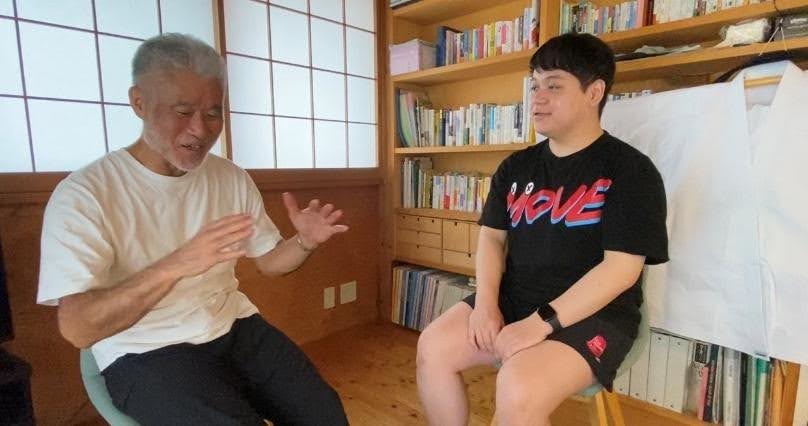
With Nanko, a young carer, at my home
From fifth grade of elementary school through high school, Nanko kept caring for his mother, who had ALS. Even after he stopped attending school in high school, he continued caring for her. And now he is studying social welfare at university. Caregiving can never have been easy for him as a child, but for him supporting someone precious was a natural act, and as he continued, he seems to have found his own path forward. Rather than “caregiving is hard, I’ve had enough,” he seems to have found his own way in using his precious time and energy for others.
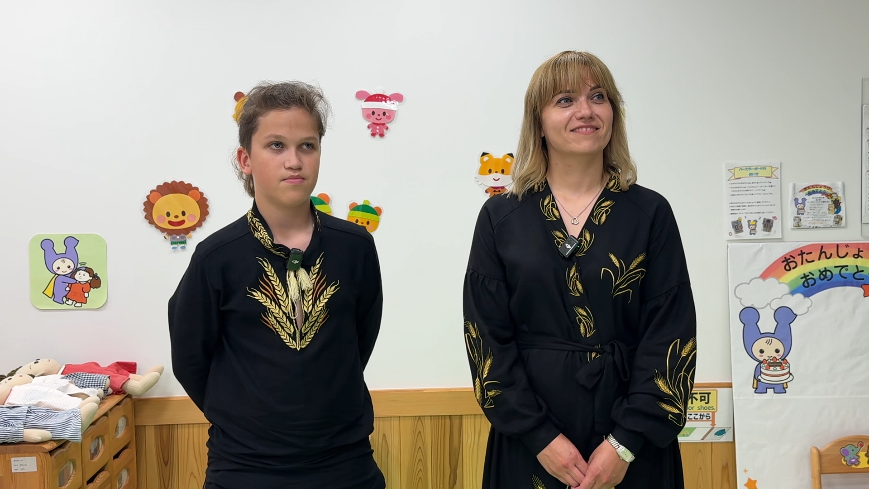
A mother and son who spoke with us at the closing ceremony of the Ukrainian Sunday School
Through an introduction from Igor, who, like me, lives in Suginami City, Tokyo, and is Vice Chairman of NPO Japan-Ukraine Friendship Association KRAIANY, we also interviewed a Ukrainian refugee mother and son. The mother, it seems, had been a history teacher.
“I left my home, my property, my job, everything behind, and crossed the border on foot with my son. All I had was the wish to protect my son’s life. Looking back, I never imagined that I, who had been living a peaceful and comfortable life until then, could do something so brave. But I did it. And I protected my son’s life. I may have lost many irreplaceable things, but at least I protected what was most precious to me. The ‘confidence’ I gained there is what supports me now.”
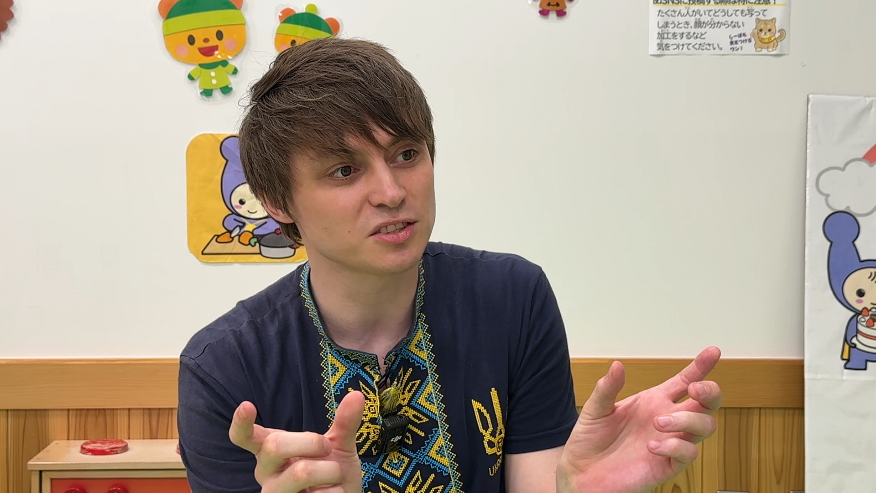
Igor of the Japan-Ukraine Friendship Association
“What is precious to me is human dignity, and I think peace, for me, means that every single person can keep their own dignity.” Igor rushes about, not wasting a moment, supporting people who have fled his home country of Ukraine. “Toda-san, please make good learning materials at Forum2050.”
He always gives me energy.
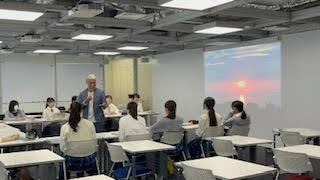
My third visit to Wayo Kudan Girls’ High School
At Wayo Kudan Girls’ High School, thanks to the kind arrangements of Principal Mizuno, this was my third class. This year, too, I spoke to third-year high school students who are about to stand at a crossroads in their lives. “Who is a ‘refugee’? Aren’t people all over the world, all of us included, living with hardship and trying to escape from it?” This sharp point from a third-year student brought me up short.
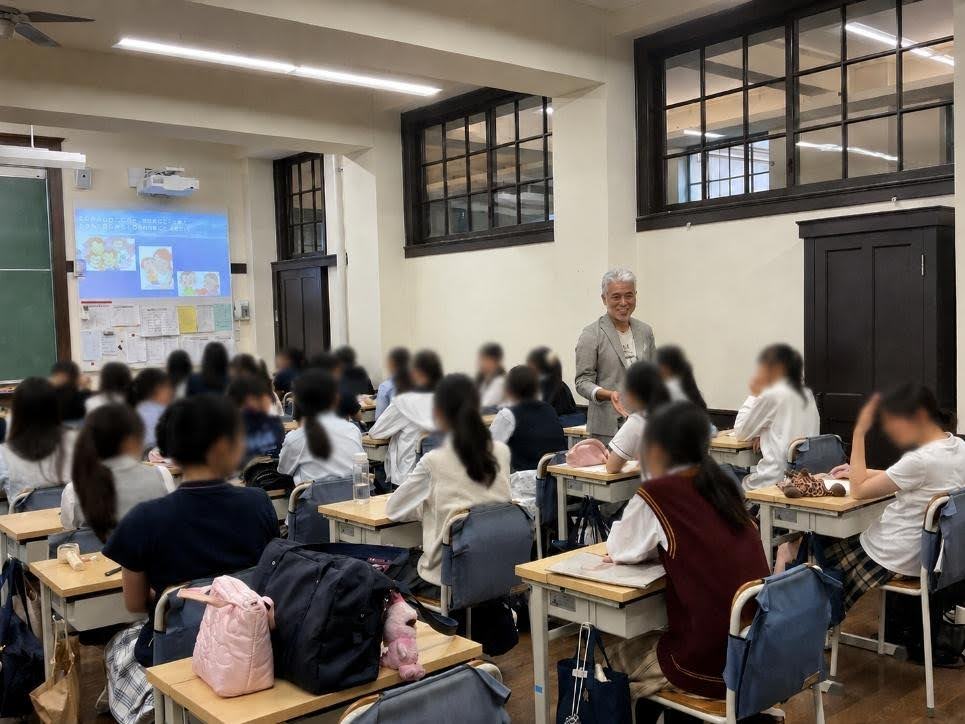
Rikkyo Jogakuin High School, which I visited for the first time, sits in a wonderful setting
At Rikkyo Jogakuin, I was originally given only one hour, but thanks to the consideration of Ueno, the teacher in charge, the session was extended to 90 minutes. A student representative shared impressions and thoughts in her own words, not from a prepared script.
“I especially want people who usually find life hard to listen to what I say. I want you to talk with me while thinking and feeling about how that hardship might change through connections with people and connections with the world.”
I had meant to raise the possibility of each person thinking about peace for their own sake, rather than “peace as my own issue” as a “should” argument. But how far did it really reach their hearts, I wonder?
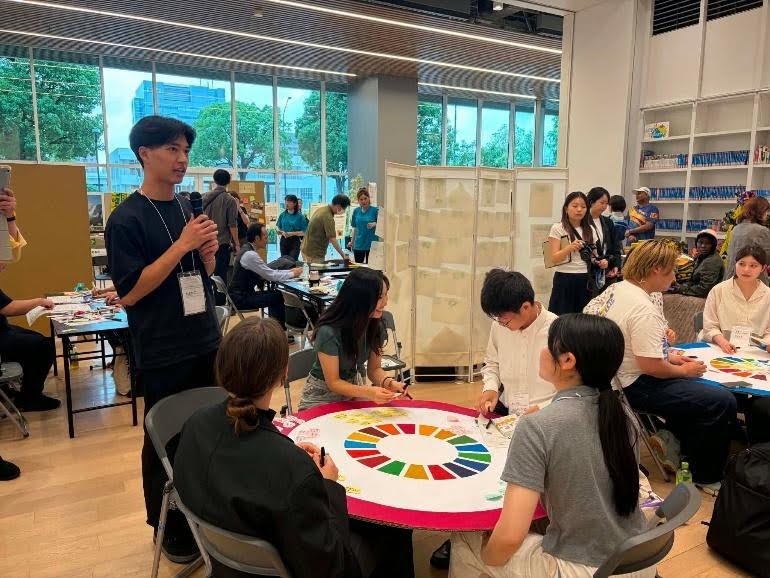
World Refugee Day, Yokohama Peace Circle
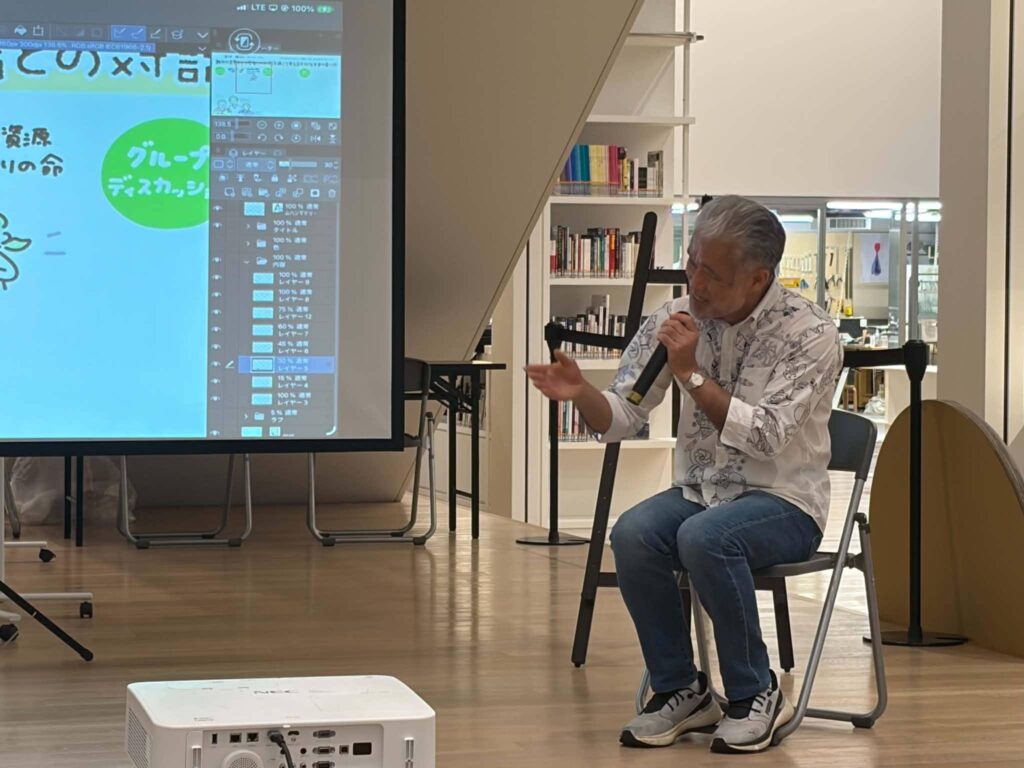
A dialogue with refugees at the Yokohama Peace Circle
June 20 is World Refugee Day. I had the privilege of serving as facilitator at the second Peace Circle event hosted by the City of Yokohama. Since an open class in December 2023, the City of Yokohama has invited us on many different occasions. This time, with the cooperation and support of UNHCR and the association, several refugees and people with refugee experience took part, and it became an exciting space for dialogue.
“What is a refugee in the first place? Doesn’t the very label ‘refugee’ make us lose sight of what really matters?”
“There are many kinds of refugees. Japanese society overprotects refugees who could stand on their own, while the people who truly need support . . .”
“Are refugees really a burden on society? Are they only objects of humanitarian charity, to be helped a little when there is room to spare?”
“Shouldn’t we think of supporting refugees as an investment in the future?”
Media also came to cover the event and wrote about how deep the discussion went.
In particular, an article in the Kanagawa Shimbun picked up a refugee’s own words: “We should think of refugees as an investment in the future.” (https://www.kanaloco.jp/news/life/article-1282266.html)
It is not only Einstein. Sergey Brin founded Google, drawing on his experience in Russia, where access to information was severely restricted. Freddie Mercury (Queen), Luka Modrić (World Cup MVP) and so on: there are countless people who left their homelands, crossed borders, overcame adversity and left remarkable achievements for society. It seems more natural to think that it was not in spite of their difficult circumstances, but that their difficult circumstances themselves shaped the course of their lives.
The starting point for protecting and nurturing peace is to understand the value of peace deep in one’s bones, and for people who live having overcome many hardships, it may be comparatively easier to understand that value.
But things do not seem to be that simple.
Omer Bartov, a leading scholar of the Holocaust; Avraham Burg, former Speaker of the Israeli Knesset; and Yehuda Elkana, a Holocaust survivor, have each said something to this effect:
“If we keep teaching the memory of the Holocaust as ‘a memory of suffering by Jews alone,’ we will reproduce a sense of victimhood that says, ‘The world is always trying to destroy us.’ What we should truly learn from the Holocaust is not ‘It must never happen to us again,’ but the universal lesson that ‘It must never happen to anyone again.'”
In other words, individuals or communities that have faced hardships that shake human existence itself can either pass on those lessons, or the experience of overcoming those hardships, to later generations in a more universal form, or, conversely, fall into a sharper sense of victimhood and a me-first mindset.
What, I wonder, leads them to choose one of these two paths?
In the current materials development, for which we must produce a draft by September, we may not be able to fully answer these questions. But what is certain, I believe, is that we must keep asking, and keep taking on challenges and moving.
This time, even more than usual, this has turned into a rambling piece of prose; please forgive me.
If there is anyone around you who might understand our activities, please introduce them to us. I hope we can widen the circle of empathy and action, even little by little. To those who have kindly agreed to subscribe recently, thank you, and we look forward to staying in touch! For the path our organization has taken so far, please do take a look at our back issues when you have a moment.
And we would be grateful for your continued guidance and support.
Jun 23, 2026
Koenji, Suginami City
TODA Takao
Email: toda@forum2050.com
Facebook: https://www.facebook.com/takao.toda.54
X: https://x.com/forum2050?s=21&t=-jQeTjzOoHjrmEbKJvNwNg
Inquiries and Consultations | Newsletter Registration
Forum2050 operates under the concept of ‘Children of the World: Each Child’s Vision for the Future Shapes Humanity’s Destiny,’ collaborating with businesses, schools, educational institutions, and others. Together with children, we create opportunities for them to contemplate peace and development in the future human society, fostering partnerships.