![NPO法人 Forum2050[Nonprofit Organization Forum2050]](https://forum2050.com/wp-content/uploads/2024/02/Forum2050logo.png)
Dear Supporters,
Hello.
I’m Takuzo Komabashiri, in charge of public relations at Forum 2050.
In this July 2025 newsletter, our member Takeo Uzawa introduces the “International Understanding Lecture” held at Kanagawa Prefectural Zama Sogo High School, and a memorable episode that came out of a journey afterwards. Also, this month we are announcing that on Sunday, August 24, 2025, we will hold “From Suginami: Peace as ‘Our Own Concern,’ Thinking Together — Forum2050 Suginami City Workshop” (a Suginami City NPO support grant project). If you have any questions or comments about the newsletter, please let us know by email or other means. Requests such as “I’d like to know more about this” are also very welcome!
Topics in this newsletter
- [Activity Report]
- [Monthly Report from TODA Takao, President, Forum2050]
- [Report from Forum2050 member Takeo Uzawa: “From the Classroom to the World 🌏: A Talk at Kanagawa Prefectural Zama Sogo High School and the Story That Followed”]
- [Event Announcement]
Activity Report
Our main activities in July were as follows.
Jul 9 Exchange of views with the Suginami Collaboration Plaza
Jul 13 Exchange meeting with Georgia
Jul 15 Meeting with the Suginami City Collaboration Promotion Section (on publicity within the city)
Jul 16 Study group on the impact of dialogue
Jul 17 Exchange of views with the JICA Overseas Cooperation Volunteers Secretariat and the Mirai RITA Foundation (public interest incorporated foundation)
Jul 22-24 Intensive dialogue at Tokyo University of Foreign Studies (summer intensive course)
Monthly Report from TODA Takao, President, Forum2050
The intense heat continues, and I hope you are all keeping well. This month, my dialogues were not at elementary, junior high or high schools but at universities. Some of them were intensive, with close to ten hours of dialogue a day over three days, and I was keenly reminded of how important it is to keep up my stamina.
This time, I would like to report on part of the change in the children’s hearts brought about by the dialogues with children that I have been telling you about since last month.
In fact, even before founding Forum2050, I had exchanged views on this point with various people well versed in quantitative analysis in fields such as happiness studies and behavioral economics. As a result, we understood at least two things. The first is that, beyond impressions such as “the look in the children’s eyes changed” or “the children’s faces became serious” (though these are also very important!), we need to make the change objectively visible. Attempts to make change visible in a reasonably objective way, even if imperfect, will be extremely important as a basis for putting such interventions into practice together with many people in the future. The second is how little prior research there is. Prior research in this field is not entirely absent, but it seems there may be almost no practical cases anywhere in the world that make visible the change in people’s hearts toward “co-creating a peaceful future,” let alone cases that try to make visible change brought about by a short-term intervention. (We are still continuing to search.)
Based on what we learned, we created a simple questionnaire. The first part consists of 10 multiple-choice questions. To gauge ① awareness of one’s connection with the world, ② feelings of gratitude, ③ willingness to pursue mutual understanding, ④ interest in the future world, and ⑤ motivation to act toward the future world, we prepared a positive and a negative question for each, and respondents answer each one on a seven-point scale from “strongly agree” to “strongly disagree.” The second part consists of two open-ended questions: “What do you want the future world you will live in to be like?” and “What do you want to do to make such a world a reality?”
We began holding dialogues with children actively from around November 2023, and with the cooperation of the schools, we decided to give the same questionnaire before and after each dialogue. So far we have held dialogues with about 7,500 children, and we were able to collect complete before-and-after data from about 4,500 of them.
The tables below show the aggregated results of the multiple-choice questions from the questionnaire conducted last year at a public junior high school in Saitama Prefecture.
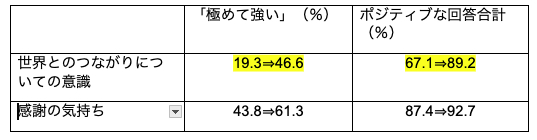
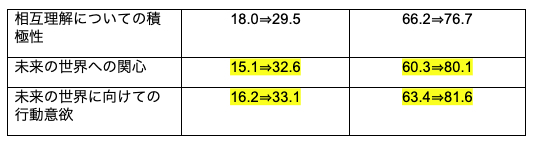
A particularly striking trend is that, regarding “awareness of connection with the world,” the proportion answering “extremely strong” rose sharply from 19.3% to 46.6%. “Awareness of connection with the world” is based on the acquisition of knowledge, which belongs to the cognitive domain in educational terms. Alongside this change, it is worth noting that both “interest in the future world” and “motivation to act” changed markedly in a positive direction. These changes relate to transformation of the students’ awareness and behavior in the non-cognitive domain.
In other words, we can infer that through the dialogue, the children’s sense that they are connected to the world became stronger (a change in the cognitive domain, or a change in knowledge), and that they also came to take a stronger interest in the future world and became more motivated to help create such a world together (a change in the non-cognitive domain, or a change in attitudes and values). To be honest, I did not expect at first that just one short dialogue of only 50 to 100 minutes could bring about such a large change.
However, these questionnaires were conducted in a school setting, so it is possible that the children answered while guessing what was expected of them. It is also possible that such effects are temporary and will largely fade as time passes. So rather than simply celebrating, I want to examine this carefully, with the advice and support of experts in this area.
Among the open-ended questions, the answers to Question 1, “What do you want the future world to be like?” were also very interesting. This remains a relative comparison, but after the dialogue, words such as “peace/happiness” and “everyone/no one” appeared far more often, and we can see heightened sensitivity and awareness toward widening one’s view to the world and co-creating an inclusive future.
Also, something we did not really expect was that quite a few students wrote about a world that is “easy to live in” or a “kind” world. Instead of writing “world peace,” each of them seems to have thought more deeply in their own way about what a desirable future looks like, to have come to see the future world as something closer to them and their own issue, and to have tried to draw their answer from things they feel in their everyday lives. That may be one way to interpret it.
In addition, though few in number, there were answers such as “I don’t know” or “nothing,” both before and after. I believe it is important never to blame the children who gave such answers, but rather to engage with them carefully and continue the dialogue.
For Question 2, “What do you want to do to make such a world a reality?” the answers before the dialogue in particular included relatively many commitments to direct actions such as volunteering, fundraising and sorting garbage. By contrast, an answer that appeared more often after the dialogue was “learn more about the diverse world.” There were also quite a few answers such as “get to know and understand people around the world with diverse opinions better.” It is possible that the children’s “attitude of learning” grew stronger: thinking about what is more fundamental in the actions they should take, not rushing to an answer, and first trying to know the diverse and complex world better and more deeply. There were also quite a few comments showing a stronger awareness of connections with other countries and other people. These changes can be said to be consistent with the changes in the multiple-choice answers.
On the other hand, even after the dialogue there were answers to the effect that “there is nothing I can do.” This can be seen as an honest reaction after becoming newly aware of how wide, diverse and complex the world is. Reflecting on this as the person who gave the talk, I think it may be because, after the children had felt the horror of armed conflict, I was not able to go deeper in the dialogue about “what we can do, and should do, precisely in times of peace.”
To begin with, the human heart, whether a child’s or an adult’s, and especially attitudes and values, do not change so easily. They change and mature over many years through the accumulation of various experiences. On the other hand, if it becomes reasonably clear that even a small step or a modest dialogue brings about good change, even slight, in the children’s hearts as a whole, the chances increase that this can lead to repeating it and putting it into practice at a larger scale. Furthermore, if we can create a system that provides opportunities with such positive effects in a sustainable way, it may open up the possibility of the whole world changing for the better.
I have mentioned before that Forum2050’s work consists of the “Kizuki Project” (activities that encourage awareness, or “kizuki,” through dialogue with children; our current activity) and “Imagine2050” (building a global mechanism, a global public good, through which children around the world connect, learn from each other and co-create the future; an activity we plan for the future). What I wanted to tell you in this letter is that the dialogues with children, or the Kizuki Project, which we are currently focusing on, are very likely bringing about change in the children’s hearts. Of course, it goes without saying that we will always keep questioning our results and keep working to improve. But to all of you who always support us, I very much wanted to share what we have learned along the way, including the twists and turns.
On the 24th of next month, we will hold an event in Suginami City with the city’s support. The report on it may have to wait until the September issue, but I will be sure to share it with you. Before that, on the 10th, the members plan to gather at my home for a long, thorough exchange of views. I think quite a few people feel that world peace is not something each of us should be thinking about, and that it is best left to the United Nations and national governments. Even so, why do we want to continue our activities for peace? And what on earth is needed so that our activities do not end up self-satisfied but win the empathy of many people…? We intend to discuss these questions from the ground up. Besides the dialogues I hold when I visit schools and other places, and the exchange meetings with Georgia led mainly by our young members, I also hope we can greatly expand activities such as Uzawa’s, included in this month’s issue, and those that other members carry out on their own initiative, and develop them so that they link organically and resonate with one another. While steadily continuing what we have done so far, we want to evaluate humbly and act eagerly on how we can evolve as an organization, without resting on our past achievements.
Finally, I’m sorry to say the same thing every time, but if you have any questions about our activities so far or opinions about our future activities, I would be very happy if you would feel free to let us know at any time.
Thank you very much for your continued support.
The intense heat continues, so please take good care of yourselves.
TODA Takao
Report from Forum2050 member Takeo Uzawa
“From the Classroom to the World 🌏: A Talk at Kanagawa Prefectural Zama Sogo High School and the Story That Followed”
From the Classroom to the World 🌏
A Talk at Kanagawa Prefectural Zama Sogo High School and the Story That Followed
Hello, everyone. I’m Takeo Uzawa, a member of Forum2050’s management team. Thank you for your continued support.
I was originally a high school English teacher, but at the age of 29 I left my job to fulfill my dream of “traveling to 100 countries.” Since then I have taught Japanese in China, Bangladesh, Sudan, Russia and elsewhere, and I have visited 86 countries so far. I am now based in Japan, where I run online exchange programs connecting Japanese junior high and high school students with learners of Japanese overseas (see last issue’s newsletter, “A Classroom Connecting the World: Online CAFE in Bangladesh and Japan”).
This time, let me tell you about the “International Understanding Lecture” I gave at Kanagawa Prefectural Zama Sogo High School, and a memorable episode that came out of a journey afterwards.
“From the Classroom to the World”: Connections Made Through a Talk at a Public High School
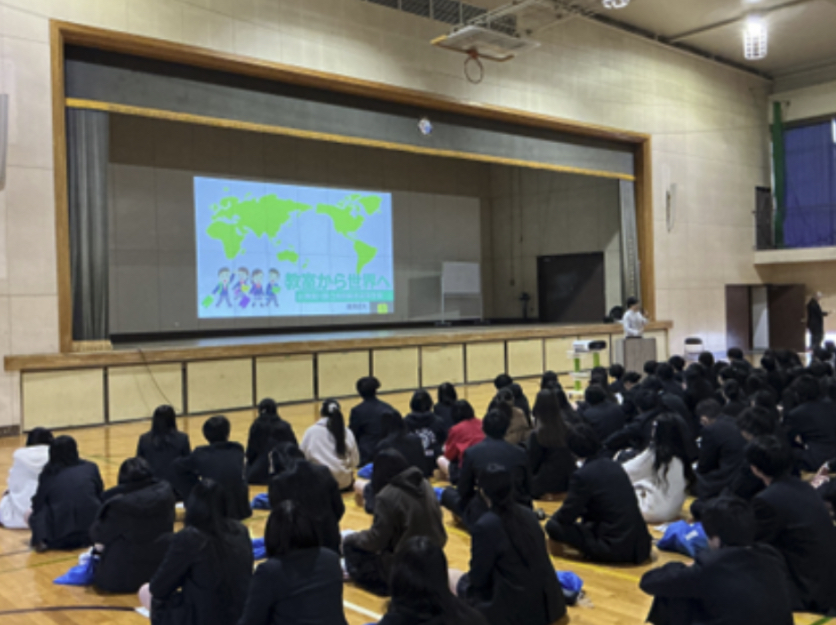
On March 18, 2025, at Kanagawa Prefectural Zama Sogo High School, I gave an international understanding lecture titled “From the Classroom to the World” to more than 500 students.
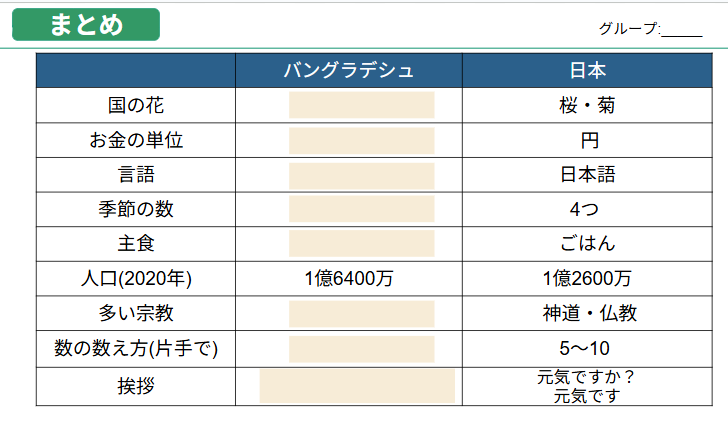
The central theme of the lecture was Bangladesh, a country I have been involved with for many years. The aim was for students to learn about differences in language, culture and values in a hands-on, enjoyable way, and then, by comparing with Japan and the town they live in now, to make new discoveries and reflect.
“Experiencing” and “Checking” Another Culture
Rather than one-way delivery of information, the lecture included group work in groups of four and worksheets, and went on as students actually touched and examined Bangladeshi banknotes and practiced greetings in Bengali. At the end, we had a quiz to check what they had learned and a live exchange with people in Bangladesh, and afterwards students put their experience into words through a questionnaire and reflection sheets.
Main content:
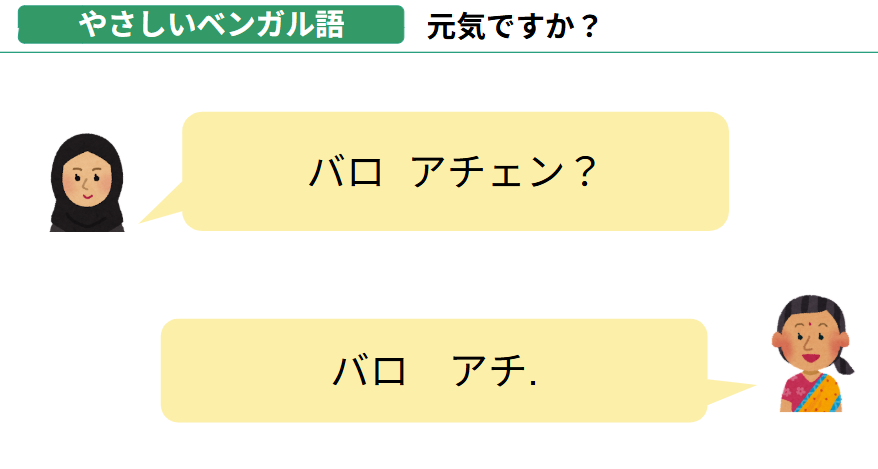
1. Practicing greetings in Bengali (e.g., “Bhalo achen?” = How are you?)
–
2. Introduction to Bangladeshi culture and a check quiz
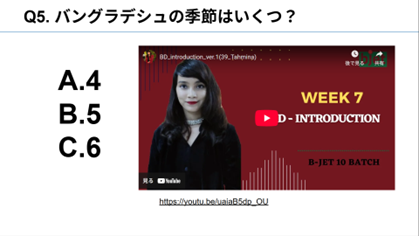
📺 Video used:
A video introducing the seasons of Bangladesh (used for the quiz answers)
https://youtu.be/uaiaB5dp_OU?feature=shared
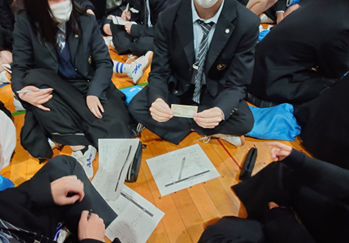
3. An exercise imagining the motifs depicted on real Bangladeshi banknotes
4. Zoom exchange with Japanese-language teachers in Bangladesh (500 students vs. 3 Bangladeshis)
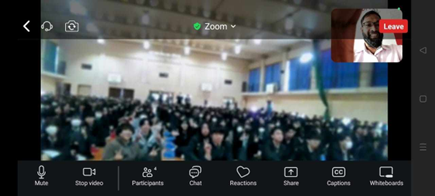
500 high school students and three Bangladeshis exchanging Bengali greetings: “How are you? (Bhalo achen?)” “I’m fine! (Bhalo achi)”
5. Group comparison work and reflection
What the Questionnaire Showed
In the questionnaire carried out after the lecture, the reactions were, happily, mostly positive.
The comments we received most often were:
- “I understood the differences and similarities between Bangladesh and Japan well.”
- “I was moved by the words ‘From the Classroom to the World.'”
- “It was good to be able to learn while actually looking at the money and the videos.”
- “The Bengali greetings were fun. I want to be able to speak more.”
- “Connecting with people in Bangladesh on Zoom left a strong impression.”
In terms of satisfaction (on a five-point scale), “very good” and “good” made up nearly 90% of the total, and I felt once again that touching real things from Bangladesh and having a “real encounter” with Bangladeshi people work powerfully to motivate learning.
An “Uzawa Corner” Appears at the School!?
After the lecture, there was one surprise.
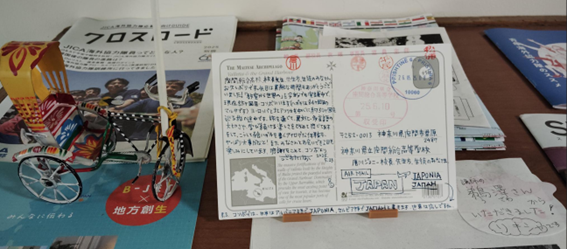
A special display called the “Uzawa Corner” was set up in a school corridor. I am told it shows the lecture materials, copies of the slides, profiles of the people I introduced, and even the picture postcard from my travels that I describe below.
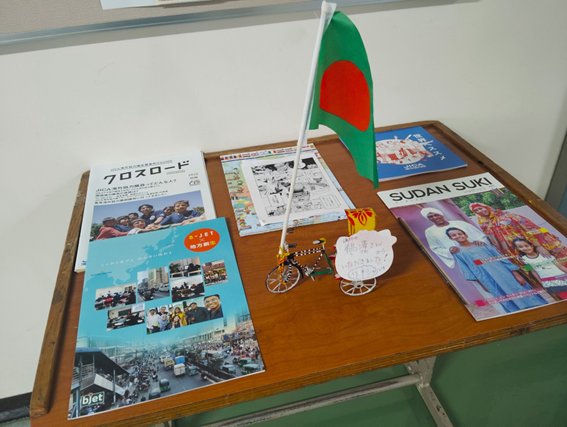
The message I received from the principal also made a deep impression on me:
“Your talk really struck home with the students of our school, where there is a culture of naturally accepting different cultures.”
Being present at a moment when a school connected with “the world” in a real way was an irreplaceable experience for me as well.
The Journey Continues: A Postcard from Kosovo
After the lecture, I set off on a journey through 30 European countries in 46 days.
Partway through that journey, on a sudden impulse, I sent a picture postcard to Zama Sogo High School from Kosovo in the Balkans.
A few days later, a heartwarming message arrived from the principal:
“In this age when everything has become digital and convenient, a handwritten picture postcard touched my heart. The writer’s ‘spirit’ comes through directly.”
I am told the postcard is still on display in the “Uzawa Corner.” It was a wondrous moment where travel and education, analog and digital, and present and past were connected.
Looking to the Future: Drawing the World from a Single Axis
Why did I want to send a postcard from my travels to the high school where I had given the talk?
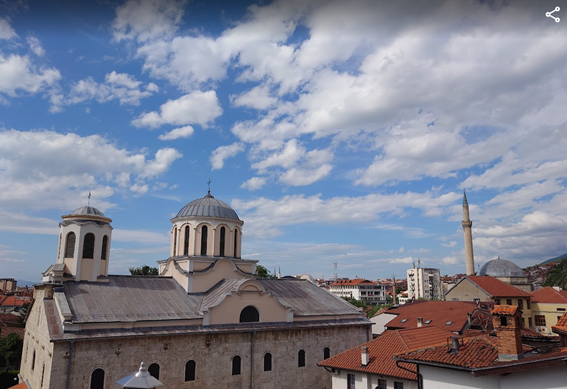
A town where a church (front left) and a mosque (back right) stand side by side (Prizren, the old capital of the Republic of Kosovo)
Through this lecture, I reconfirmed the potential of “connecting with the world from the classroom.”
But what stayed with me most was not the contact with other countries itself, but the sense of a bond, an “en,” that formed with the teachers who created the lecture with me and with the students who responded right in front of me.
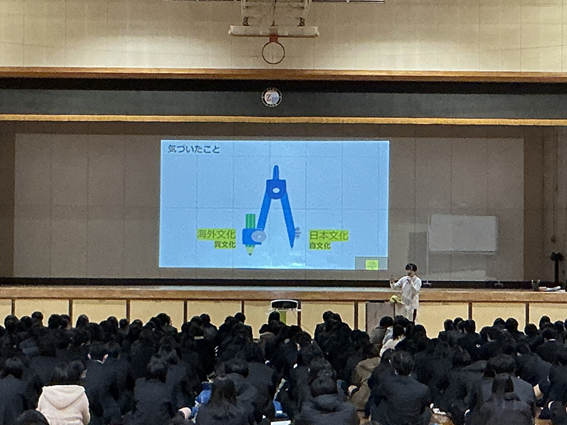
In the lecture, I talked about a “compass.”
To draw a circle out toward the world, you cannot turn the compass unless your footing, your axis, is firm first. If the axis wobbles, no matter how far you try to extend the line, you cannot draw a good circle.
And now I think again that this “circle” (en, 円) is also the “en” (縁) of human bonds.
When we talk about international understanding or international cooperation, we tend to think we “have to look far away.”
But isn’t what really matters, first of all, carefully building relationships with the people in front of us?
What am I able to do for my own family? Am I contributing to my community myself? At work and at school, are my feelings really getting through?
I think that only when we build up this kind of “cooperation” and “empathy” close to home can connections across borders also arise naturally.
This time, through my interactions with the teachers and students of Zama Sogo High School, I truly felt this strongly. The news that an “Uzawa Corner” had been created at the school after the lecture was just like a bond, an “en,” drawn all the way around with a compass.
And I feel once again that I have been blessed with encounters that come back to me in a passing moment on my travels and make me want to pick up a pen.
Together with my fellow members of Forum2050, while cherishing this “starting point of connection,” I hope we can keep drawing small circles (= bonds) little by little in schools.
I hope someday you’ll join us
And the world will live as one
— John Lennon, “Imagine”
Thank you very much!
Event Announcement
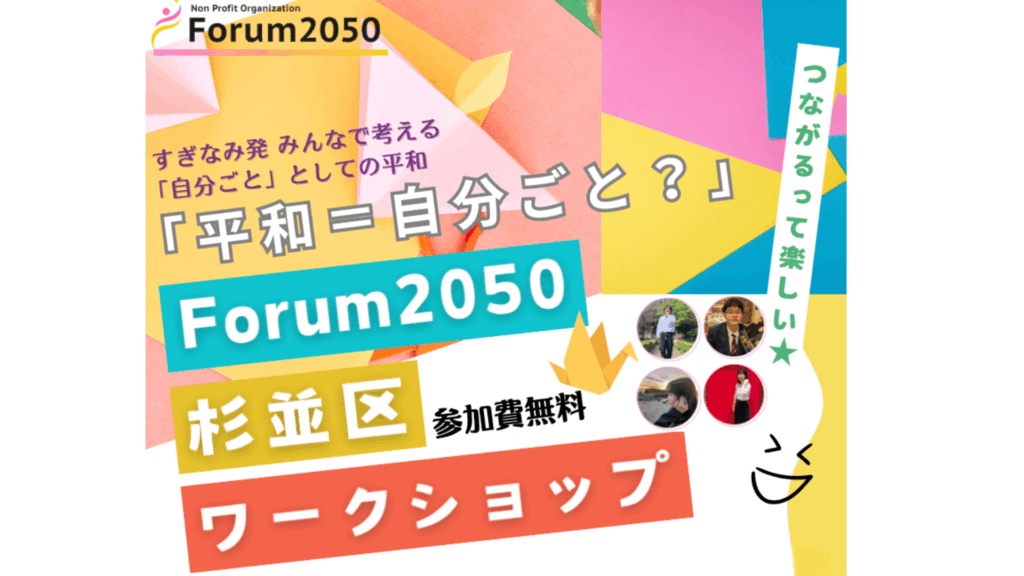
Forum2050 will hold “From Suginami: Peace as ‘Our Own Concern,’ Thinking Together — Forum2050 Suginami City Workshop” (a Suginami City NPO support grant project).
- Date and time: Sunday, August 24, 2025, 10:00-12:00 and 14:00-16:00
- Venue: WIM Conference Room Ogikubo (ROOM B), 1-16-16 Kamiogi, Suginami-ku, Tokyo
- Fee: free
- Access: 1-minute walk from the West Exit of Ogikubo Station (JR Chuo Line / Sobu Line); 2-minute walk from the West Exit of Ogikubo Station (Tokyo Metro Marunouchi Line)
Purpose of the event
In today’s world, peace cannot be taken for granted. As wars and armed conflicts continue, have you ever thought about “peace” as your own issue? We are holding a workshop in Suginami City that will be an opportunity for the children who will shape the future to learn about the realities of the world and think about peace. We will also screen videos showing the lives of children in Bangladesh and Cambodia and their wishes for peace. No special knowledge or experience is needed to take part, and young people and parents with their children are welcome.
Schedule for the day
The morning and afternoon sessions have the same content.
Part 1: Let’s share material to think about together
- “Why are we thinking about peace now?” “What does peace mean to us?”
- “How are children around the world doing now?” (with video screening)
Part 2: Let’s talk together
- Your thoughts: “What made you become interested in peace?” “What does peace mean to you?” “Peace doesn’t feel like my own issue…”
- (Drawing on your own experience) “How can people around us, especially young people, come to think about peace as their own issue?”
How to apply
Please apply for this event via the application form.
Application deadline: Saturday, August 23, 2025
#InternationalUnderstanding #Education #Peace #SDGs #Workshop #InternationalCooperation
Inquiries and Consultations | Newsletter Registration
Forum2050 operates under the concept of ‘Children of the World: Each Child’s Vision for the Future Shapes Humanity’s Destiny,’ collaborating with businesses, schools, educational institutions, and others. Together with children, we create opportunities for them to contemplate peace and development in the future human society, fostering partnerships.