Dear supporters,
Hello.
This is Takuzo Komabashiri, PR officer for Forum2050.
This September 2025 issue of our newsletter reports on the “Workshop for Thinking of Peace as Our Own Concern,” held with support from Suginami City’s NPO grant program. We also bring you a message from Igor of the Japan-Ukraine Friendship Association KRAIANY, who joined us as a special guest on the day. Igor’s words, “If we come to think of peace as something taken for granted, we risk losing sight of its value, and by the time we notice, it may be too late,” struck me as a message that each of us should take to heart amid the tense world situation.
If you have any questions or comments about the newsletter, please let us know by email or other means. Requests such as “I’d like to know more about this” are very welcome too!
Topics in This Newsletter
- [Our Activities]
- [Event Report]
- [Message from Igor, Vice Chairman, Japan-Ukraine Friendship Association KRAIANY]
- [Monthly Report from TODA Takao, President, Forum2050]
Our Activities
Our main activities in September were as follows.
Sep 4 and Sep 8: Talks (dialogue) at Yokohama City Shinohara Elementary School
Sep 11: Education Cooperation Week 2025
Sep 16: Meeting with the Japan-Ukraine association
Sep 24: Dialogue with 6th graders at Toyo Eiwa Jogakuin Primary School
Sep 27: Dialogue with parents of 1st to 6th graders at Bunkyo City Kohinatadai Elementary School
Sep 28: Exchange meeting with Georgia (planned)
Event Report
On August 24, 2025, with support from Suginami City’s NPO grant program, Forum2050 held a workshop for thinking of peace as our own issue, taking a valuable first step as our first event in our home ward of Suginami.
On a Sunday when the temperature topped 37°C, people of many generations, from elementary, junior high, high school and university students to seniors, gathered in a meeting room in Ogikubo. Across the morning and afternoon sessions, 29 participants and 10 staff members discussed what each of us should feel, think and do so that we can think of peace as our own issue, and above all so that the young people who will shape the future can come to feel that way.
All of the event’s hosting and facilitation was done by the organization’s young members (from elementary school to university students). This time, we asked participants to answer a survey at the end of the event. We report the results below, together with our members’ reflections.
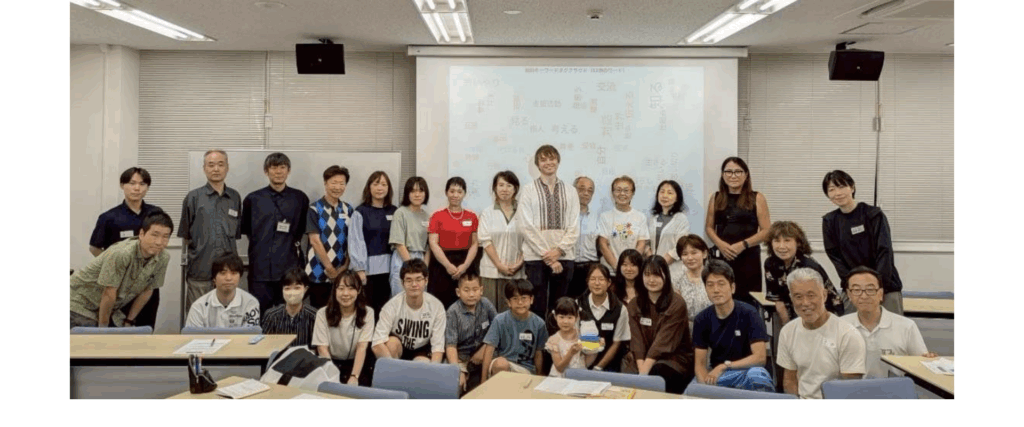
Number of Participants
[Morning] Total: 28 (18 + 10 staff)
[Afternoon] Total: 20 (11 + 9 staff)
Summary of Survey Results
Q1. How did you hear about this event?
(1) Flyer: 12 (2) Suginami City public relations bulletin: 2 (3) Other (introduced by a friend, etc.): 34
Q2. How satisfied are you with the workshop overall?
(1) Very satisfied: 37 (2) Somewhat satisfied: 4 (3) Neither: 2 (4) Somewhat dissatisfied: 0 (5) Very dissatisfied: 0
Q3. Did your interest in and awareness of “peace” change after taking part in the workshop?
(1) Increased greatly: 25 (2) Increased a little: 7 (3) No change: 1 (4) Decreased a little: 0 (5) Decreased greatly: 0
Q4. Please tell us about any content or moments in this workshop that left a particular impression on you, or your thoughts on the workshop as a whole.
- Igor’s story about Ukraine left an impression on me. I thought that, unless you actually experience war, you can’t think of peace as your own issue.
- It was wonderful to see the children who will shape the future presenting their feelings and thoughts with confidence.
- It was hard not just to listen but to put what I had thought into words myself, but by putting it into words I understood what I had been thinking.
- I felt strongly once again that, rather than thinking “We are at peace now, so maybe we don’t need to do anything,” we must think “The peace we have now is something we can enjoy thanks to the efforts of those who came before us, and we too must work hard to maintain it.”
Q5. (Please tell us about any points for improvement or suggestions regarding this workshop or our organization’s activities.)
- In the future, I would like many more people from other countries to take part.
- It would have been good to have a brief overview of the history and ideas of peace theory.
Reflections from Our Members
- What surprised me most this time was the variety of backgrounds of the people who took part. When we shared opinions, people said things a little different from what we had heard before, such as “From now on, I want to think about how I can pass this on in my work,” and “We only learn about peace in class, so I want to look into it myself.” This made me feel that our activities are spreading to many different places.
- At this Suginami event, our theme was “From Suginami: Peace = Our Own Concern?” I talked about what led me to start thinking about peace and how peace is thought about. In the group work, we split into groups and participants talked about what had led them to think about peace. I realized that there are many people who, after seeing the news, think “I want to do something. Is there anything I can do?” but don’t know what to do. I too learned about wars and poverty from the news, didn’t know what to do, and the only thing I could do was donate, which was the thing closest at hand. Through this event, I felt that it is important to carry out many activities, even small steps, for the sake of people who feel a sense of crisis but can’t act (don’t know how to act).
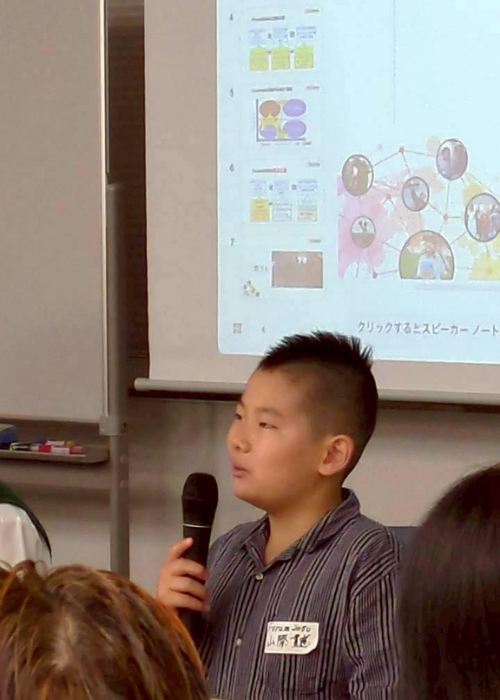
- Afterward, one participant (the mother of a daughter in junior high school) told us that the event had brought about a change in her child’s awareness and behavior. Specifically, parent and child talked together about the history of the war and read newspaper features on the end of the war together. On the day, the daughter seemed nervous, but we can infer that a big change was taking place inside. As a result, we believe the event led to the kind of “awareness” and “behavior change” our organization hopes to bring about in children.
- There is no single right answer to peace. As each participant brought their thoughts as “their own issue” and engaged with them, the event nurtured a positive feeling of wanting to value small everyday actions, even while sensing the distance between oneself and the world and how difficult it is. Also, while each person’s idea of peace is shaped by their own experiences, there is also the reality that war can suddenly begin one day, so the whole room strongly shared a sense of the importance of protecting the peace we have here and now. It was a meaningful time, and the two hours seemed to fly by.
- A dialogue event on peace for local residents was a big challenge for Forum2050. I feel that having people of many ages gather in the intense heat, giving up their precious holiday time, was an opportunity that opened new horizons for Forum2050’s work. Comments such as “The wish to protect the people who matter to us is the starting point of peace” and “The challenge is how to win the empathy of people who are not here today” resonated with me. Lately, waking up in the morning and hearing the news is very painful. The powerful hold up their own idea of justice and crush the weak without a second thought. I want to share with many people the feeling that I absolutely do not want such a world, and to widen the circle of peace. That is the spirit in which I will carry on Forum2050’s activities.
[Message from Igor, Vice Chairman, Japan-Ukraine Friendship Association KRAIANY]
For 80 years since the war, Japan has kept the peace without experiencing war. This is by no means an accident. It is something your grandparents and the generations before you built up as the fruit of their desperate efforts. But if you come to think of peace as something taken for granted, you risk losing sight of its value, and by the time you notice, it may be too late.
My homeland, Ukraine, was also living in peace until 11 years ago. But in 2014, Russian forces entered Crimea and the east, and many people came to suffer. Then, in early 2022, troops gathered near the border, and anxiety grew about what would happen to our families, our schools and the places that held our memories. On the morning of February 24, the full-scale invasion began, and Ukrainians heard air-raid sirens for the first time since the Second World War. Everyday life collapsed in an instant, and those sirens still sound almost every day now, three and a half years later. Cities have been destroyed, and even schools and hospitals have been attacked. An unimaginable reality has spread before us.
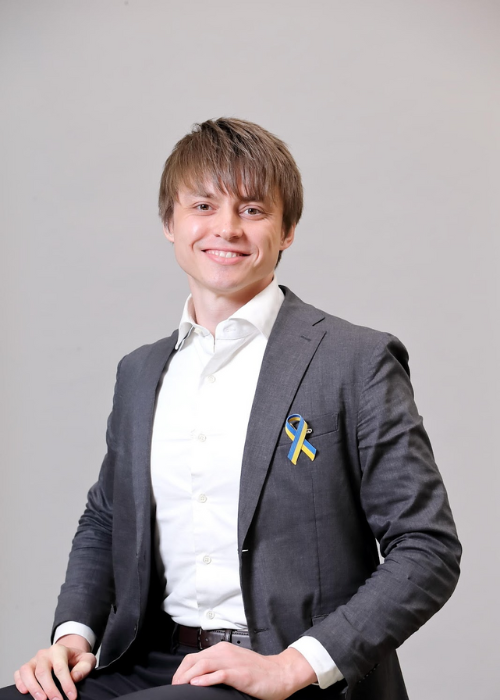
Events that take away peace can come suddenly to anyone. The area of Ukraine now occupied by Russia, if transposed onto Japan, is equivalent to Hokkaido, Aomori Prefecture and Iwate Prefecture combined. Please imagine, if that were Japan…
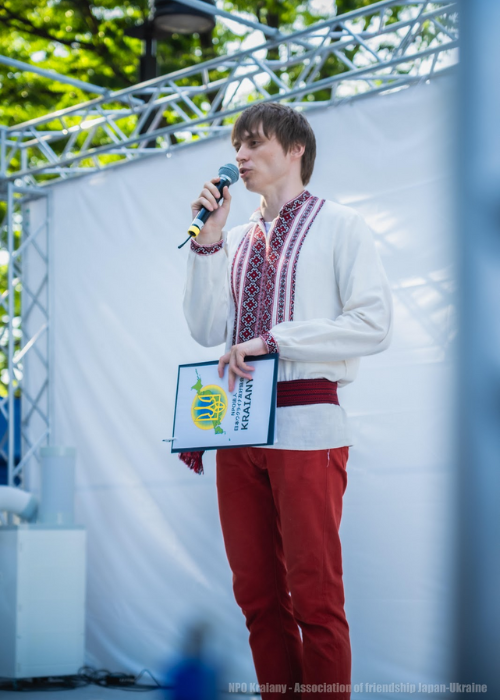
Many experts predicted that “Ukraine won’t last a week.” But now, three and a half years later, we Ukrainians are still fighting for our freedom. Peace is not something given to us; it is something we protect and rebuild. We are still working as hard as we can to win back the peace we have lost.
Amid all this, what I feel strongly is how precious Japan’s peace is. Ukrainians who have evacuated to Japan, and those working hard at rehabilitation, all say the same thing: “Japan is peaceful. I felt it the moment I got off the plane.”
Young people of Japan,
please, from this very moment, keep making efforts to protect your precious peace, so that you never find yourselves in a situation where you “have to win peace back.”
I ask this of you from the bottom of my heart.
Igor Yevtushuk, Vice Chairman, NPO Japan-Ukraine Friendship Association KRAIANY
Monthly Report from TODA Takao, President, Forum2050
Dear everyone,
Russia 200,000-250,000; Sudan 150,000; Ukraine 60,000-100,000; Myanmar 80,000; Palestine 65,000; Burkina Faso 7,500; Haiti 5,000; Israel 1,700; the Democratic Republic of the Congo 1,000…
The number of people killed in the wars, armed conflicts and civil wars under way around the world has kept rising in recent years.
Twice already this month, the U.S. military has blown up boats belonging to “confirmed narcoterrorists” (in President Trump’s words) on the high seas.
After bombing a Hamas base in Qatar, Prime Minister Netanyahu justified a right of cross-border self-defense, saying, “Terrorists, wherever they hide, should not be given shelter, and they will be targets of our attacks.”
According to opinion polls around the world (PRRI, YouGov, Edelman, Ipsos, WVS), acceptance of violence is steadily rising in many parts of the world, including the United States. (In every survey, people who say that “violence is never acceptable under any circumstances” are still the majority, but depending on how the question is framed, 10% to 30% of people say that using violence is unavoidable, and that share is gradually growing.)
However, these changes in the world draw little attention in Japan. For many Japanese people, war is something from 80 years ago, and armed conflicts around the world are a fire on the far shore; they never come to the center of Japanese people’s view.
On August 24, Forum2050 held its first event in Suginami City, with a grant from the city. (https://forum2050.com/2025/09/03/suginami-peace-workshop/)
The theme was “From Suginami: Peace as ‘Our Own Concern.'”
Right after the hydrogen bomb test at Bikini Atoll, Suginami became a base of the movement to ban atomic and hydrogen bombs, led by mothers and fishmongers. In less than a year after the test, the signature campaign gathered 34 million signatures, and this became the driving force behind the first World Conference against Atomic and Hydrogen Bombs, held in Hiroshima.
The fact that it was nameless citizens who stood up, not a particular political party or organization, has been inscribed in the history of citizens’ movements, not only in Japan but around the world.
Igor, Vice Chairman of the Japan-Ukraine association KRAIANY, whom we invited as a guest to the Aug 24 event, spoke to us about two kinds of peace: “peace that must be protected” (but which has become so taken for granted that we are usually not aware of it), and “peace that must be won back” (but which, once broken, is extremely hard to win back). Before the exchange of views began, we also showed videos of children in developing countries. They were made in Cambodia and Bangladesh, where the organization’s two Vice Presidents are posted, and they bring together children in each country speaking about their hopes for the future.
People of many ages and positions shared frank opinions: “What is peace in the first place?” “Around me there’s an atmosphere where people hesitate even to say the word peace…” “Peace came to feel close to me largely because of the real experiences of people close to me.” “When I had a child and my attention turned to the future, I became aware of how important peace is.” “When we talk about peace, it’s often based on Japan’s experience, but I thought we should look at what is happening in the wider world.” After the event, too, we received comments such as “My junior high school daughter has started reading the children’s newspaper closely,” “I felt empathy seeing young people speak so sincerely,” and “It gave me a chance to think about what I can do.”
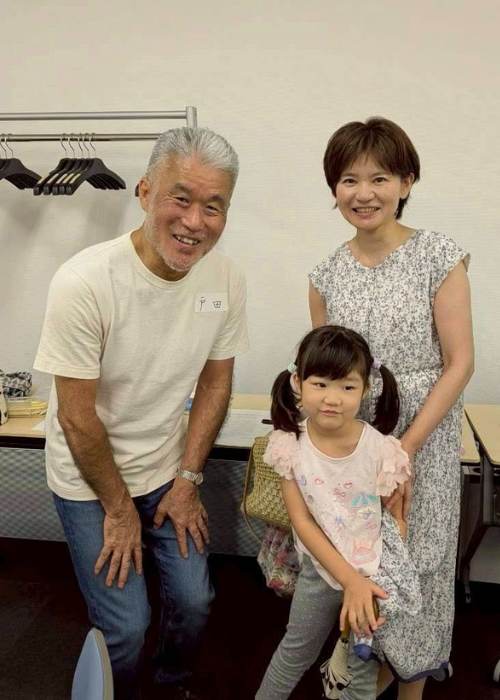
Excluding staff, the total number of participants was around 50, so it was a very small event. But because of that, every participant was able to speak, and people from different positions could share different opinions, which I think was a valuable result. In addition, in the run-up to this event, we were able to build a network not only with Suginami City but also with the city’s international exchange association, the collaboration plaza, local activists, schools and others. Through introductions from participants, we have visited an elementary school in the city to pay our respects, and local activists have started reaching out to us. One of them kindly reached out to us with a welcome proposal: “I’ve made karuta cards for 200 countries and regions of the world. Could we collaborate on something?” and we replied, “Then let’s think about whether we could make karuta for peace.”
Then, without missing a beat, on September 11 we held an event on a similar theme at JICA Headquarters. It was one of the events in Education Cooperation Week, organized by JICA, and, as last year, we planned an event for peace and were given a slot. We had planned a hybrid event, but just beforehand the organizers decided to make it online only. On the day, torrential rain from a linear rainband meant that some of the organizing staff and guests who had planned to gather on site could not get to JICA, and there were various other unexpected events. Even so, with everyone’s cooperation, we managed to hold it as planned.
At this event, in addition to Igor, we heard from Ichiro Hatanaka, Representative Director of the Future of Humanity Institute (P-ALS). Hatanaka was diagnosed with ALS four years ago and, prompted by this, set up the foundation, and, while facing their own progressing ALS, supports people who likewise live with difficulties. About 35 years ago, Hatanaka also went through hard times together with me (Toda) in Zaire (now the Democratic Republic of the Congo), which was in continued turmoil after the end of the Cold War. On the 11th, Hatanaka set out in an electric wheelchair from Zushi for Kojimachi in the heavy rain, but the trains stopped and it was not possible to get there, so Hatanaka joined at short notice from an office near Tokyo and spoke earnestly about their wishes for peace, grounded in their own experience. Hatanaka spoke frankly about how the feelings of someone who has been told how long they have left to live, and the feelings of someone who has lost a loved one in war, cannot be understood however hard we try, but how important it is to stay close to them and walk together toward a bright light; and, above all, about how important it is to protect peace, which we usually tend to take for granted, with careful thought and preparation.
As always, the event was run by Forum2050’s young members. This time, three of them, Yuika Tsukuba, Akari Itaya and Maaya Fujimoto, shared the MC duties, and as commentators, Kanji Yamagiwa and our newest members Hana Miyoshi and Ichiha Amaya each spoke about their thoughts. It was an event where, quite literally, the power of youth was on full display. I am afraid this may sound like blowing our own trumpet, but I feel the strength of Forum2050’s young members grows with every event. I also think this made an even stronger impression than last year on the people who took part in the event and on the JICA staff. It would be wonderful if the growth of our young members enriches each of their lives and becomes a source of strength when we all work together.
In addition, Makoto Kajita spoke, drawing on experience as a teacher in special needs classes. Resonating with Hatanaka’s talk, Kajita pointed out both how hard and how important it is to understand and care for one another when our circumstances differ.
From September, talks at schools and elsewhere start up again. The first was a dialogue with 6th graders at Yokohama City Shinohara Elementary School in Shin-Yokohama, which we have already held twice. On the 24th, we are scheduled to hold a dialogue with 6th graders at Toyo Eiwa Jogakuin Primary School. And on the 27th, we will hold a dialogue about peace with parents of 1st to 6th graders at Bunkyo City Kohinatadai Elementary School.
Finally, the lingering summer heat is still intense, so please watch out for summer fatigue and autumn fatigue, and take very good care of yourselves. We look forward to your continued support.
Sep 16, 2025
In Koenji, Suginami City
TODA Takao
Email: toda@forum2050.com
Inquiries and Consultations | Newsletter Registration
Forum2050 operates under the concept of ‘Children of the World: Each Child’s Vision for the Future Shapes Humanity’s Destiny,’ collaborating with businesses, schools, educational institutions, and others. Together with children, we create opportunities for them to contemplate peace and development in the future human society, fostering partnerships.